Humanoid Robot Fighting in 2026: URKL Rules, T800 Capabilities and What the Matches Actually Test
Editorial standards and source policy: Editorial standards, Team. Content links to primary sources; see Methodology.
Last checked: July 20, 2026.
In July 2026, humanoid robot combat gained momentum along two parallel tracks: the inaugural match of the URKL Global Humanoid Robot Free Combat League—launched by Zhongqing Robotics—and the CCTV-hosted mecha combat demonstration at the World Artificial Intelligence Conference (WAIC). Both events are highly media-friendly—but their technical significance goes far beyond “metal-on-metal punches.” Key capabilities—including teleoperation, autonomous perception, full-body control, impact resilience, thermal management, and post-match maintenance—determine whether these robots can move from stage spectacle to real-world deployment.
Direct access
- China News Service: URKL Inaugural Match Report: Timing, number of participating teams, and on-site details.
- Zhongqing Robotics Official Website: T800 product specs and URKL official promotional materials.
- WAIC 2026 Forum Page: Conference forums and event listings; the old
/activitypath now returns 404. - CCTV.com: Public media hub for coverage of both events—specific programs require date-based verification.
Testing Boundaries: RadarAI did not operate the T800 on-site, nor did it obtain remote-operation logs, motion-capture data, or autonomous strategy records from competing teams. This analysis draws solely on publicly disclosed rules, official product imagery, and verified event reporting. Where no control-chain evidence exists, we avoid phrases like “fully autonomous combat.”
Capabilities Actually Tested in Competition
| Capability | Observable In-Match Effect | Required Evidence | What Not to Rely On |
|---|---|---|---|
| Dynamic Balance | Whether the robot recovers after being struck—and how quickly | Full-match replay, IMU/joint logs, number of falls | Highlight clips of successful strikes |
| Autonomous Recovery | Whether it stands up unaided after falling | Number of recovery attempts, success rate, time-to-stand | A single successful demo |
| Control Strategy | Punch/kick combinations, distance management, tactical shifts after pauses | Control method used, end-to-end latency, operator input timing | Headlines claiming “AI-driven combat” |
| Structural Integrity & Thermal Management | Whether performance degrades across five rounds—e.g., throttling, alarms, or physical damage | Joint temperature logs, power consumption, repair/replacement records | Final score alone |
| Safety Systems | Reliability of emergency stops, safety tethers, and referee interventions | Trigger logs and anomaly-handling reports | A match with zero incidents |
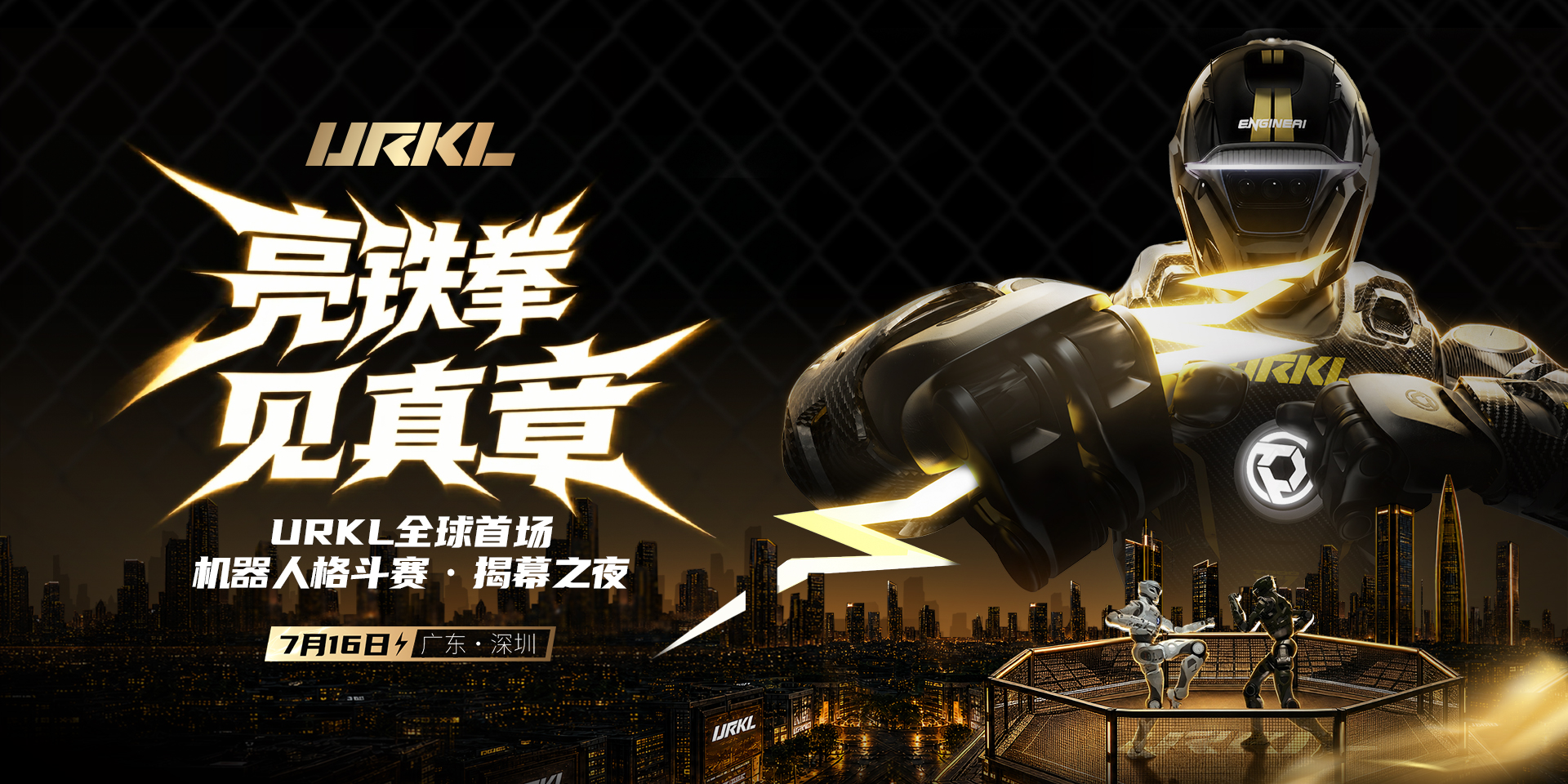
Evidence type: Official event poster. Source: Zhongqing Robotics website, accessed July 20, 2026. Confirms event theme, date, and venue—not stability under load.
Clearing Up the Rules First
| Item | Confirmed Status as of July 20, 2026 | Boundaries to Keep in Mind |
|---|---|---|
| URKL | Inaugural match held in Shenzhen on July 16, 2026 | Plans call for 32 teams; all use standardized T800 units |
| WAIC Mecha Combat | Live motion-capture duel showcased on-site | Motion capture ≠ fully autonomous combat |
| Control Methods | May include teleoperation, motion-capture mapping, and autonomous modules | Different control modes must not be ranked together on autonomy scales |
| Hardware Performance | Falls, collisions, kicks, and recoveries were visible | Stage durability ≠ industrial-grade reliability |
| Format | 5 rounds × 5 minutes; max 5 robots per match; up to 3 tactical timeouts | Outcomes reflect control method, robot swaps, and maintenance—not just raw capability |
By 2026, humanoid robot combat will feature at least two distinct formats:
- URKL is a formal league with standardized T800 hardware, team selection, and regulated match rules.
- WAIC Mecha Arena, by contrast, emphasizes live motion capture and human–robot collaboration—focused on demonstration, not competition.
Both are called “combat,” but they serve fundamentally different purposes: URKL better benchmarks control algorithms; WAIC highlights interaction pipelines. Edited highlight reels from either should never be conflated as evidence of the same level of autonomy.
Why 32 Teams All Use the T800
URKL functions more like an ongoing league brand—designed to drive platform iteration through consistent rules, team development, and repeated head-to-head matches. WAIC’s mecha arena, meanwhile, is a showcase event: built for real-time motion capture, audience engagement, and live interactivity. Though both fall under the broader robot-arena trend, they must be separated in comparative tables—because their schedules, control methods, win/loss criteria, and technical goals differ entirely.
Combat rapidly surfaces engineering issues often hidden in routine demos: foot slippage, joint overheating, communication latency, post-collision pose drift, battery mounting integrity, cable loosening, and fall recovery—all within minutes. It generates high-value engineering data—but may also rely on teleoperation, soft protective gear, restricted motion sets, or manual resets for spectator appeal. So this article doesn’t rank teams by “who won,” but by how transparently their control chains and failure logs can be verified.
Five Rounds Expose the Control Stack—Not Just Punches and Kicks
- Control latency: Motion capture must map human pose to robot joints while compensating for scale, DOF, and torque mismatches. Excessive delay destabilizes rapid combo sequences.
- Contact control: Impact changes momentum—controllers must correct stance and balance in milliseconds.
- Fall recovery strategy: Intentional energy dissipation, critical joint protection, and fast reorientation matter more than simply avoiding falls—they reflect real-world robustness.
- Thermal & power management: High-torque maneuvers heat motors, drivers, and batteries. Short rounds with long maintenance windows don’t prove sustained operational capability.
- Structural integrity: Post-impact checks are needed for gearbox backlash, housing cracks, sensor misalignment, and cable wear.
- Autonomous decision-making—only after the above—is where perception (opponent tracking, distance estimation), action selection, and safety constraints come into play.
To assess true autonomy, disclose: number of operators, data links used, robot behavior during disconnection, use of pre-programmed moves, sensor inputs, and referee intervention. Without these details, “AI-powered autonomous combat” is just marketing.
| Evaluation Dimension | What Should Be Recorded | What Not to Conclude |
|---|---|---|
| Autonomy | Operator count, motion capture usage, pre-programmed moves, onboard perception, disconnection behavior | Mistaking teleoperated wins for AI intelligence |
| Stability | Fall frequency, recovery time, manual resets, slippage events | Judging stability based only on edited success clips |
| Durability | Round duration, thermal rise, physical damage, part replacements | Inferring long-term reliability from a single demo |
| Safety | Emergency stop performance, arena isolation, impact limits, referee protocols | Using raw impact force for spectacle without documenting safeguards |
| Transfer Value | Which control modules apply to logistics, inspection, or rescue tasks | Equating combat performance directly with commercial readiness |
Robot Combat Is Becoming a Stress Test Platform
Humanoid robots must maintain balance amid unpredictable contact—and combat turns that challenge into something audiences instantly grasp. Tournament champions deliver headlines; frequent falls, collisions, and recoveries yield actionable data to refine joints, controllers, and safety logic. Only once that data feeds back into repeatable testing does robot combat evolve from spectacle into engineering infrastructure.
Developer Case Study: Reconstructing One Match as Sensor Logs & Failure Reports
Ask robot teams to skip offensive moves entirely—and instead isolate and repeat disturbance recovery:
In a padded environment with safety harnesses, apply standardized pushes to the robot’s shoulder—three directions (front/side/back) × three intensity levels × 10 repetitions = 90 total trials. Log IMU data, foot force, joint current, temperature, and control state throughout.
| Phase | In-Match Action | Pass Criteria |
|---|---|---|
| Baseline | Stand still, walk, and rise—10 times each | ≥95% success rate without external disturbance |
| Disturbance | Front/side/back × 3 intensities × 10 reps | Push device synced precisely with timestamped logs |
| Recovery | Record step initiation, crouch, fall, and stand-up attempts | ≥80% recovery success at mid-intensity level |
| Durability | Inspect temperature, gearbox backlash, and cables every 30 trials | No structural damage or hazardous overheating |
| Pause Triggers | Emergency stop failure, abnormal harness load, or joint fault alarm | Immediate halt and root-cause review |
Start with baseline motions—standing still, walking, taking hits, and getting up—before moving into sparring. Only then can algorithm errors be clearly separated from hardware-level safety protections. Every fall must be synchronized across control inputs, joint alarms, emergency stops, safety tether forces, and recovery time. Relying solely on final scores conflates teleoperation skill, robot performance, and safety operator intervention into a single, misleading result.
Where “Fully Autonomous Combat” Most Easily Distorts Reality
- Autonomy failure: Using the label “fully autonomous” without disclosing the actual control method.
- Statistical failure: Showing only one successful clip, with no record of attempts, failures, or falls.
- Durability failure: Swapping parts between rounds while claiming continuous reliability.
- Safety failure: Omitting details on arena isolation, emergency stop protocols, or operator protection.
- Transfer failure: Jumping from match outcomes to claims about factory, home, or rescue readiness.
You cannot infer full autonomy from smooth motion alone—unless the control method is disclosed. You cannot infer stability from a single success video—unless you also know attempt count, fall count, and human intervention frequency. Standardized hardware controls only some variables: communication latency, strategy training, operator input, and safety rules still heavily shape results.
The Most Valuable Data to Publish for the Next Match
- Full rules: Confirm weight class, round count/duration, scoring, banned moves, and manual reset policies.
- Control chain disclosure: Clearly distinguish motion capture, gamepad input, pre-recorded motion libraries, onboard perception, and autonomous decision-making.
- Failure statistics: Track falls, overheating, part swaps, comms dropouts, and emergency stops.
- Platform specs: Report height, mass, joint types, peak torque per joint, and battery capacity/chemistry.
- Data openness: Will logs, datasets, or reproducible experiment setups be released?
Adding flashier camera angles won’t advance technical understanding. What truly matters: control mode breakdowns, end-to-end latency, number of falls and autonomous recoveries per match, emergency stop triggers, per-match energy consumption, and repair time. Official rules, referee logs, and full-match replays cross-validate each other—short clips are only clues.
URKL’s Inaugural Match Rules Reveal Technical Boundaries More Honestly Than Edited Highlights
China News Service on-site report, July 16 provides auditable rules: The event plans to select 32 teams globally, all using the standardized, full-size humanoid robot T800, developed by Zhongqing Robotics. The ring is an octagonal steel cage. Uniform hardware reduces platform variation—making operator skill, strategy, and control implementation more comparable—but also means results cannot be generalized across robot brands.
Official matches consist of 5 rounds, each lasting 5 minutes. Each team may register up to 5 T800 units, with control methods left open. There are exactly 3 tactical timeouts per match. Scoring prioritizes round wins; ties are broken first by KO count, then total wins, then cumulative points. These rules confirm it’s a team-based competition—with substitutions, pauses, and multi-layered judging. A single clip of a robot rising does not reflect overall stability.
“Free choice of control method” is especially critical. It lets teams pursue different human–robot interaction paths within the rules—and means autonomy level cannot be inferred from win/loss alone. Technical reporting should break down how much each component contributes: motion capture, gamepad input, action libraries, onboard sensing, and autonomous planning. WAIC’s mecha combat openly emphasizes real-time motion capture; URKL delegates control design to teams. Both test hardware and whole-body control—but neither justifies a blanket “autonomous combat” label.
Engineering data should be logged per round: falls, non-contact instability events, time-to-rise, reasons for tactical timeouts, robot swaps, joint alarms, peak temperatures, and post-match part replacements. With 5 rounds × 5 minutes, a full theoretical match lasts 25 minutes—far closer to sustained high-load operation than a 30-second stage demo, yet still far shorter than an industrial shift. Only by publishing these intermediate metrics can URKL help external teams assess balance control, structural impact resistance, and maintenance cost.
Five registered robots mean “completing the match” can rely on substitutions. Technical reports should report both per-robot consecutive round count and team-wide completion rate. If a team sustains performance through frequent swaps, that reflects strong league operations—not single-unit durability. The three tactical timeouts should also be categorized by cause: strategic re-planning, comms issues, thermal throttling, or hardware inspection.
Points, KOs, wins, and cumulative scores form a multi-layered win/loss hierarchy—but engineering rankings require a separate table. Control teams are evaluated on effective action rate and fall recovery; structural teams on joint gap and component replacement after impact; operations teams on mean time to repair; safety teams on emergency stops and field incidents. Only by placing competitive scores alongside engineering metrics can we explain why a given team won—and whether its solution is transferable to logistics, inspection, or rescue tasks.
Ninety standardized thrust tests complement competition data: matches deliver unpredictable combinations of impacts, while lab-based tasks provide comparable samples—same intensity, same direction, same number of repetitions. If a robot rises repeatedly in match clips but shows inconsistent success under standardized lateral disturbances, the team should prioritize controller tuning—not PR spin—to address the underlying regression issue.
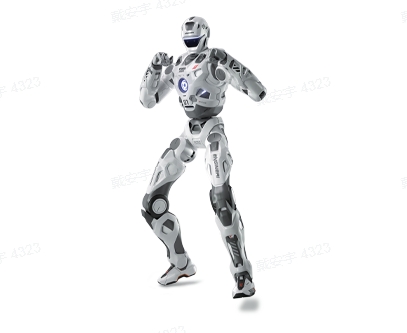
Evidence type: Official product image. Source: EngineAI Robotics official website, accessed 2026-07-20. Used to identify consistent hardware form factor; algorithms, control methods, and combat performance still require match-based evidence.
Turning a Single Match into an Analyzable Dataset
A round-level log must include at minimum:
team_id / robot_id / control_mode / round / event_ts / fall_type / recovery_seconds / pause_reason / max_motor_temp / parts_replaced.
Falls must be categorized: valid knockdown, intentional power-off, non-contact imbalance, or comms failure. Pauses must be classified as tactical, thermal shutdown, comms loss, or hardware inspection. With 32 teams and up to 5 robots per team, the rulebook permits up to 160 registered devices—but actual on-site numbers may be lower. If organizers publish actual registration count, completed rounds, and robot swaps, we can compute metrics like failures per 100 rounds, consecutive appearances per robot, and average repair time.
Video footage must retain full round timestamps. Cutting out post-fall waiting, human approach, and robot swaps systematically underestimates recovery and maintenance overhead. Relying solely on official highlight reels prevents cross-team benchmarking. If sensor logs remain unavailable, organizers should at least release full-match video for manual event annotation—followed by dual annotator verification of fall type and recovery duration. Where inter-annotator disagreement exceeds 10%, rules must be clarified first—not rushed into leaderboard publication. Full video, annotation tables, control mode documentation, and rule version must also be archived together; without this, consistency across seasons becomes impossible.
Frequently Asked Questions
What is URKL?
URKL is a global humanoid robot free combat league launched in 2026. Its inaugural season was spearheaded by teams affiliated with EngineAI Robotics.
Is the WAIC robot competition the same as URKL?
No. The CCTV-hosted mecha combat at WAIC emphasizes real-time motion capture demos. URKL operates as a sustained league with recurring events and evolving technical requirements.
Are the robots fully autonomous in combat?
It depends on the control chain used per match. Motion capture or teleoperation enables real-time movement control—and should not be automatically labeled “fully autonomous.”
What technologies does combat validate?
Core capabilities include dynamic balance, contact-aware control, impact resilience, self-righting, thermal management, and fail-safe mechanisms.
Why isn’t the champion enough?
Victory emerges from hardware capability, rule interpretation, operator skill, maintenance rigor, and autonomy level—combined. A championship title alone cannot serve as a proxy for general-purpose robotics competence.
Official & Primary Sources
- China News Service URKL On-Site Report: Confirms 32 teams, T800 platform, and full tournament structure
- WAIC Forum Page: Current-year forum access point; legacy event paths now return 404
- CCTV.com: Public information on CCTV’s mecha combat demonstrations
- EngineAI Robotics: Platform specifications and company background
All access dates are July 20, 2026. News sources are used to verify event timing and official statements. For version numbers, technical parameters, access points, company identities, and event schedules, official pages take priority. Details unavailable on official pages are explicitly marked as “Pending Verification” — no assumptions or fill-ins are made from search snippets.
Read Next
Related reading
- Qwen API pricing and access for builders: verify the model, region, and real test cost
- MiniMax long-context API evaluation: test evidence retrieval before trusting the window size
- GLM coding API evaluation for builders: test one repository patch with diff, tests, and rollback
- Cloudflare Pay Per Crawl test guide: what publishers and AI crawlers can verify in private beta
RadarAI helps builders track AI updates, compare source-backed signals, and decide which changes are worth acting on.