Anthropic Economic Index Connector: How to Query Work Data and Which Conclusions to Avoid
Editorial standards and source policy: Editorial standards, Team. Content links to primary sources; see Methodology.
Last checked: 2026-07-27.
“Which work can AI already take over?” The connector improves the question, not the verdict
Anthropic launched the Economic Index Connector in Claude.ai on July 22, 2026. Managers can query public AI-and-work data in natural language: which tasks are more often automated, which look more collaborative, and how patterns vary. The full datasets remain free; the connector is a more accessible query surface.
The central limit belongs in the opening. It observes Claude usage, not the entire labor market. The June report's relevant chat and Cowork sample window runs from April 10 to June 10, 2026; other sections also compare surfaces such as Claude Code. Numbers with different time windows, products, or denominators should not be combined casually.
| Keep these three data types separate | What it can answer | What it cannot answer directly |
|---|---|---|
| Claude usage data | Which tasks users bring to Claude and how they interact | How much of an occupation's total work AI has replaced |
| Public Record survey | Results from a nationally representative survey of more than 50,000 Americans | Actual time and quality inside one company |
| Internal company data | Work time, review rate, errors, and customer outcomes | What the entire market will do next |
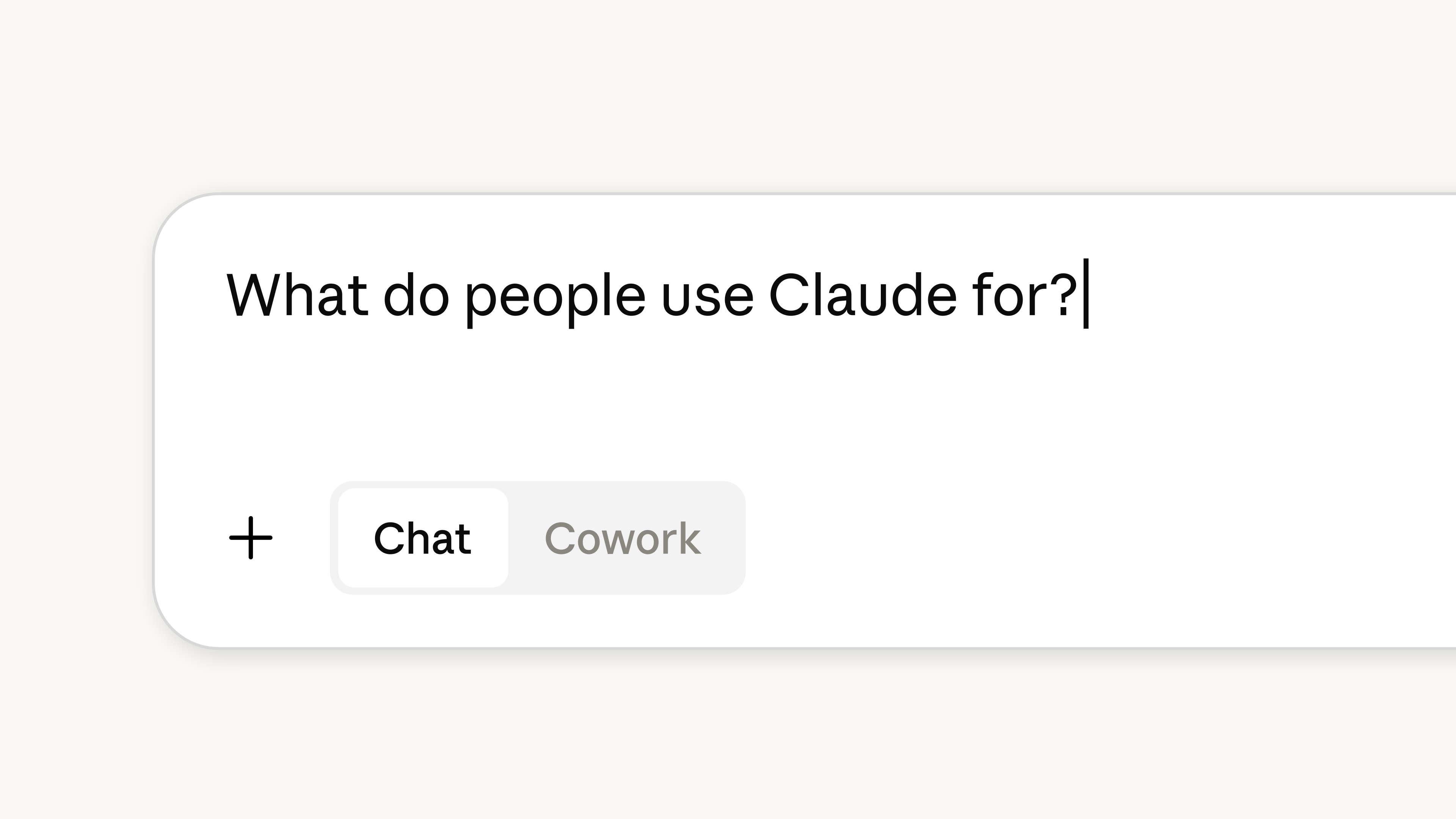
Source image: Anthropic's connector announcement, accessed 2026-07-27. It shows natural-language data queries in Claude.ai; useful analysis still follows the cited answer back to its underlying table.
Automation is not job replacement
In the Economic Index classification, automation broadly means that a user delegates a complete task with little follow-up input. Augmentation includes iterative collaboration, learning, validation, and related modes. These labels describe how one task was completed, not whether a job disappeared.
A complete draft response may count as automation even when a person still decides whether to send it, checks compliance, and owns the customer outcome. A multi-turn planning conversation may count as augmentation even when Claude contributes substantial work. Role redesign therefore requires task data beside time, quality, responsibility, and business results.
One survey result says more than 35% of respondents expected AI could do most of their work within 12 months. That is a self-reported expectation, not an employment forecast. The linked respondent sample also had a 12% female share, a sample characteristic that should not be reported as a population-wide female usage rate.
How the data are processed
Anthropic describes privacy-preserving classifiers in which another Claude instance reads and classifies transcripts, with sparse cells filtered to reduce re-identification risk. This design addresses privacy while leaving classification uncertainty. Preserve the source table, definition, time window, and denominator instead of copying only a natural-language summary.
That is the connector's real value: it helps non-analysts ask questions and links answers back to public data. It does not turn the dataset into an answer that no longer needs checking. If an answer lacks a table citation or a comparison changes denominators, stop and inspect the source.
Write a denominator dictionary before querying
The phrase “usage share increased” may use all Claude conversations, one product surface, one occupation, a task category, a country, or a survey sample as its denominator. Create a denominator dictionary before analysis. For each metric, lock five fields: observed unit, time window, product surface, geography, and filtering rules. Trend comparisons are credible only when all five align.
Keep three analytical levels distinct. A conversation is an interaction, a task is a unit of work, and an occupation contains many tasks. More conversations do not directly imply fewer work hours, and more automation within one task does not establish occupation-wide replacement. Moving from task to role requires that task's time weight, frequency, quality requirements, and accountability.
Save the original query and exported table, not only the connector's prose answer. When a later report changes, the team can then distinguish new data from a changed category or query. A polished conclusion whose denominator cannot be reconstructed should not enter workforce planning or board material.
Customer-service case: 180 employees and 27 task categories
Imagine a customer-service operations lead managing 180 employees with work mapped into 27 internal task categories. The connector can show how related tasks appear in external Claude usage. The first step is not removing roles; it is aligning Anthropic's categories with the company's own definitions.
Save the table, time window, denominator, and task definition for each query. Place the result beside internal work time, error rate, supervisor review, and customer satisfaction. If external usage shows frequent complete delegation while internal work still needs heavy review, that gap becomes a pilot question: is the difference caused by knowledge, process, risk requirements, or the sample?
Only tasks with stable internal inputs, measurable quality, and clear accountability should enter a pilot. Usage share cannot be converted directly into layoffs, occupations cannot be substituted for tasks, and correlation cannot be written as an employment effect caused by AI.
What the connector is good for
Use it to discover questions, find comparisons, and test hypotheses: is a task more often automated or augmented, do patterns differ by occupation, and in which time window did a change occur? Do not use it to answer how many people a company should dismiss, when an occupation will disappear, or whether AI caused a macroeconomic outcome.
For a manager, the productive outcome is not a replacement percentage. It is a shortlist of tasks worth validating internally with real time, quality, and customer evidence.
Official and Firsthand Sources
Related reading
- Qwen API pricing and access for builders: verify the model, region, and real test cost
- MiniMax long-context API evaluation: test evidence retrieval before trusting the window size
- GLM coding API evaluation for builders: test one repository patch with diff, tests, and rollback
- Cloudflare Pay Per Crawl test guide: what publishers and AI crawlers can verify in private beta
RadarAI helps builders track AI updates, compare source-backed signals, and decide which changes are worth acting on.