WAIC 2026 Highlights: Qwen3.8, Kimi K3, Agents, Robots and Industrial AI
Editorial standards and source policy: Editorial standards, Team. Content links to primary sources; see Methodology.
Last checked: July 20, 2026
The World Artificial Intelligence Conference (WAIC) 2026 took place in Shanghai from July 17 to 20. While booth count reflects scale, five converging trends reveal deeper industry shifts:
- Qwen3.8 and Kimi K3 push model scale upward;
- AI agents move beyond demos into real-world coding and enterprise workflows;
- Humanoid robots shift from static displays to dynamic, head-to-head competitions;
- Compute solutions emphasize tight hardware-software co-design;
- Industrial AI starts delivering measurable factory-floor metrics—not just promises.
This summary focuses on verifiable deliverables, not booth buzz or marketing claims.
Direct access
- WAIC 2026 Forum Page: Official forum and agenda hub.
- China News Service: WAIC Hard-Tech Breakthroughs: Coverage of Sugon’s 8000 AI supercluster, smart pharmacy robots, and on-site results.
- China News Service: WAIC AI Agent Field Report: AI agents, GPU-native databases, and flexible manufacturing in action.
- China News Service: AI + Energy & Carbon Digital Space: The
1+4+Narchitecture and 2026–2028 rollout timeline. - Qwen3.8 Official Post & Kimi K3 Quickstart Guide: Official entry points for the two headline models launched at the event.
Verification Scope: RadarAI has cross-checked the official forum page and three on-site reports. However, we could not access exhibitor booths interactively via browser backend, nor enter vendor customer environments. Below, “impact” is explicitly labeled as on-site observation, vendor claim, or deployed case—no demo is presented as scaled deployment.
Our recommendation: procurement teams should prioritize products with real customer deployments and measurable acceptance criteria. Put first-time hardware unveilings into technical due diligence, preview software into small-sample retesting, and multi-year roadmaps into a watchlist. A booth video without documentation or a named owner should not enter the procurement shortlist.
Capabilities, Impact, and Maturity of Key Announcements
| Item | Capability / Claim | Evidence Level | Due Diligence Before Procurement |
|---|---|---|---|
| Sugon 8000 | Vendor claims it’s China’s first fully domestic 100,000-GPU AI supercluster | First public hardware unveiling + media coverage | Customer acceptance records, actual usable GPU count, interconnect performance, sustained utilization rate |
| Smart Pharmacy Robot | Dispensing and delivery in ~70 seconds; already deployed across multiple Shanghai pharmacies | Deployed case + media coverage | Order accuracy rate, exception rate, manual intervention frequency, average daily order volume |
| GPU-Native Cognitive Database | Vendor claims 20–100× faster than CPU-based alternatives | Preview product + vendor claim | Independent retest on identical hardware, dataset, queries, and cost basis |
| AI + Flexible Manufacturing | Booth demo showing vision-guided production coordination | On-site demonstration | Actual production line takt time, unplanned downtime rate, and formal customer acceptance report |
| AI + Energy & Carbon Digital Space | 1+4+N framework; restructuring in 2026, service completion in 2027, expansion in 2028 |
Official launch + multi-year roadmap | Annual deliverables, data integration scope, and verified energy-saving outcomes |
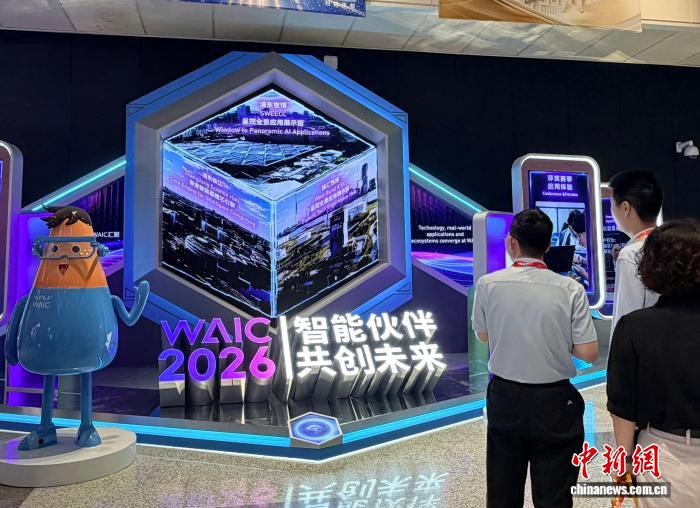
Evidence type: On-site photo from media report. Source: China News Service: WAIC AI Agent Field Report, accessed July 20, 2026. Photo confirms live demonstration—not widespread deployment.
Five Signals From Four Days
| Item | Confirmable Status as of 2026-07-20 | Boundaries to Preserve While Reading |
|---|---|---|
| Conference Dates | July 17–20, 2026, Shanghai | Final schedule and closing materials issued by the organizer are authoritative |
| Models | Qwen3.8 preview and Kimi K3 gain attention | Preview status, API availability, and open-weight status differ significantly |
| Agents | Coding, office work, research, and enterprise workflows showcased collectively | Demos ≠ production-ready or commercially available systems |
| Robots | Embodied AI, biomimetic platforms, and mecha combat draw interest | Remote operation and autonomous control must be distinguished clearly |
| Industry | Parallel forums on computing infrastructure, industrial AI, and governance | Signing MOUs, pilot deployments, and mass production represent distinct stages |
WAIC 2026 runs from July 17 to 20. Model launches attract the most media coverage—but onsite, attendees also saw domestically built AI chips running live, pharmacy-deployed robots already in daily use, GPU-native databases still in preview, and energy & carbon management systems backed by a three-year rollout roadmap. These span vastly different levels of maturity—and must be assessed separately.
The Real Thread of WAIC 2026
WAIC’s value lies in bringing models, applications, compute infrastructure, robotics, and governance into one shared industrial context.
- Model vendors compete for attention with larger parameter counts and longer context windows.
- Agent developers must prove integration with real-world enterprise systems.
- Robotics firms demonstrate hardware progress through motion control and combat performance.
- Industrial users care most about yield, downtime, and cycle time.
For readers, this means avoiding blanket narratives like “AI is exploding everywhere.” Instead, each track requires its own evidence bar: verifiable claims, reproducible demos, named customers, and contractual commitments.
Two low-value content patterns often emerge post-conference:
1) Booth-by-booth recaps, or
2) Lists of ten “groundbreaking” announcements—without context or verification.
This page focuses only on changes that could impact your team’s testing or procurement decisions over the next 90 days. High-detail topics—like Qwen3.8, Kimi K3, or robot combat leagues—are routed to dedicated pages. This page provides the strategic map; subpages deliver hard facts on models and competitions.
From Sunway 8000 to 70-Second Pharmacy Dispensing: What’s Already Live?
- Models: Verify official model ID, open-weight status, license terms, pricing, and benchmark configurations.
- Agents: Confirm connected systems, executable actions, permission scope, audit logging, and human-in-the-loop fallback.
- Robots: Document control mode (autonomous vs. remote), continuous runtime, payload capacity, failure modes, and maintenance requirements.
- Compute: Record chip architecture, cluster scale, supported frameworks, throughput, and power efficiency.
- Industrial AI: Track production line, dataset size, baseline metrics, measurable improvement, and operational duration.
First-time announcements reflect event scale—not product readiness. A “global premiere” may still be in closed beta. Meanwhile, an unannounced industrial deployment might have run smoothly for months. Prioritize procurement based on evidence strength:
✅ Publicly accessible product + documentation
✅ Reproducible demo under real conditions
✅ Named customer + documented baseline
✅ Signed contract / active mass production
—each step increases weight.
Governance forums aren’t window dressing. Cross-border data flows, model safety, content watermarking, and sector-specific accountability will directly constrain deployment. Engineering teams should log at least one capability and one compliance constraint per relevant product—so post-event follow-up goes beyond a simple feature checklist.
| Evaluation Dimension | What to Record | What Not to Conclude |
|---|---|---|
| Models | Version, access method, price, license, and task-specific benchmarks | Ranking models solely by parameter count |
| Agents | System integrations, permissions, logging, human override, and task success rate | Treating chat demos as production automation |
| Robots | Autonomy level, uptime, payload, fault recovery, and safety certifications | Judging capability only by stage performances |
| Industrial AI | Customer name, production line, baseline metric, deployment duration, and quantified gain | Citing percentage improvements without denominator |
| Compute / Governance | Framework compatibility, power consumption, data flow paths, regulatory alignment | Repeating slogans or peak-performance claims only |
Beyond Model Hype: Industry-Scale AI Is Delivering Real Systems
At WAIC 2026, China’s AI competition shifted from single-model leaderboards to end-to-end system delivery. Models remain the entry point—but adoption hinges on compute cost, agent toolchains, robot reliability, and domain-specific data quality. RadarAI users can build a quarterly watchlist right after the conference: flag pages for weekly updates, products for hands-on testing, and candidates for passive observation only.
Buyer Team Case Study: How to Conduct a Booth-Level Evidence Audit
Have enterprise innovation teams process 30 candidates within 14 days post-conference:
6 models, 8 agents, 6 robots, 6 industrial AI solutions, and 4 compute/governance offerings.
Each candidate must be evaluated using only one evidence card—no sales decks allowed.
| Stage | Booth Verification Action | Pass Criteria |
|---|---|---|
| Collection | Official page, product documentation, on-site materials, and one external source | All 30 candidates have timestamped evidence |
| Classification | Categorized as live / beta / demo / announced |
Status matches linked evidence |
| Task Design | Write a test that can run in ≤2 hours per candidate | Clear input, action, and acceptance criteria |
| Screening | Score each candidate on business relevance, evidence quality, cost, and integration effort | Only top 5 advance to pilot phase |
| Pause | No documentation, no named contact, or only video clips provided | Move to “watch list”—excluded from procurement shortlist |
Buyer teams do not rank candidates by booth buzz. Instead, for each candidate they preserve four evidence types:
- Official webpage
- Product documentation
- On-site input/output samples
- External validation
Different verification checklists apply to: live systems, deployed products, preview software, and roadmap items. If a vendor cannot provide a point-of-contact, documentation, or clear deployment boundaries, the solution goes into the lead pool—not the procurement shortlist.
Four Most Common Misjudgments at Conferences
- List Failure: Listing dozens of products without indicating status, access method, or user task.
- Launch Failure: Assuming “conference debut” equals production-ready or mass-deployable.
- Case Failure: Citing industrial performance gains (e.g., “+30% efficiency”) without baseline, timeframe, or sample size.
- Procurement Failure: Adding vendors to the shortlist solely due to crowded booths or media coverage.
- Update Failure: Failing to track post-event changes in documentation, pricing, pilot progress, or delivery timelines.
“First appearance” does not mean purchasable.
“Live demo” ≠ unattended operation.
“Company claims 20–100× speedup” ≠ reproducible on your query set.
“A 3-year roadmap” ≠ full feature delivery by 2026.
Any inventory lacking maturity labeling is just a hotword dump—not an actionable assessment.
Post-Conference Delivery Milestones Worth Tracking
- Closing Results: Cross-check official announcements—projects launched, contracts signed, governance documents published, and associated metrics.
- Model Release Materials: Track formal model cards, API availability, and weight releases for Qwen3.8 and Kimi K3.
- Agent Customer Cases: Require named workflows, input volume, success rate, and handover ratio (human-to-agent transition).
- Robot Production Readiness: Focus on units shipped, uptime consistency, and after-sales support capability.
- Industrial Repurchase: Contract conversion from pilot to production—and cross-line replication—matters more than launch hype.
Post-conference updates must center on concrete deliverables:
- Qwen3.8’s official model release and weights
- Kimi K3’s full-weight release
- Sugon cluster customer names and acceptance criteria
- Pharmacy robot sustained runtime data
- GPU-accelerated database public benchmark methodology
- Energy & carbon system’s 2026 architecture refactoring milestone
No new delivery = no re-evaluation—even if the story resurfaces in secondhand coverage.
At the Same Conference, Model Launches, Live Demos, and Industry Projects Belong in Three Separate Ledgers
The WAIC official site scatters forum and exhibition info across disjoint pages. The legacy /activity path returns 404; the forum page remains accessible for verifying session names, timing, and organizers. Editors should first categorize every item into three distinct tables:
- Model/product launches
- Live demos
- Industry projects or signed agreements
Evidence requirements differ sharply across categories—so they must never be ranked together on a single “major announcement” leaderboard.
A model launch requires at minimum: model ID, access URL, model card, pricing, and license terms.
For example: Qwen3.8-Max was still in Preview during WAIC; Kimi K3 already had a live API and pricing page—but its full weights are scheduled for release before July 27.
Labeling both as “trillion-parameter models” obscures critical delivery-stage differences.
The WAIC overview page should retain explicit stage tags—and route parameter specs, cost details, and testing guidance into separate, dedicated articles.
Live demonstrations must document the control chain and reproduction conditions. In robot combat using real-time motion capture, what viewers see is a low-latency mapping system—combining full-body control and hardware execution—not fully autonomous decision-making. The same applies to agent demos: if someone pre-logs into the system, prepares data, and scopes the task beforehand, success in the demo cannot directly imply readiness for enterprise environments regarding permissions, exception recovery, or concurrency handling. Such demos still hold value—but deliverables should be the precise inputs and steps needed for the next reproducible test.
For industrial projects or signed contracts, track the responsible party, contract value, construction timeline, acceptance milestones, and post-deployment operations. The total project value announced in closing press releases reflects only event scale—not procurement relevance. What matters more to buyers is being able to locate, 90 days later, the point person, product documentation, pilot customers, and baseline performance metrics. This article’s “30 Candidate Tasks” requirement—that each item fits on a single evidence card—is precisely intended to compress event-day hype into traceable, actionable fields.
A fourth ledger—dedicated to governance—is equally essential. Model safety, cross-border data flows, content watermarking, and industry-specific accountability rarely appear in demo scoring—but can block deployment entirely. Every candidate entering pilot testing must log both one capability proof and one data/compliance constraint. Products with capability evidence but no documented data lineage should not make the procurement shortlist.
The first 14 days post-event offer an ideal window to calibrate using these three hot topics as reference cases:
- Qwen3.8 card marked preview: API and model weights unavailable;
- Kimi K3 card marked API live / weights scheduled, with tiered token pricing;
- URKL card marked event live, listing 32 teams, T800 GPUs, and 5×5-minute match rules.
All three are trending—but their next steps differ sharply: repository regression testing, long-document cost benchmarking, and perturbation resilience testing. This approach surfaces actionable divergence, not just popularity rankings.
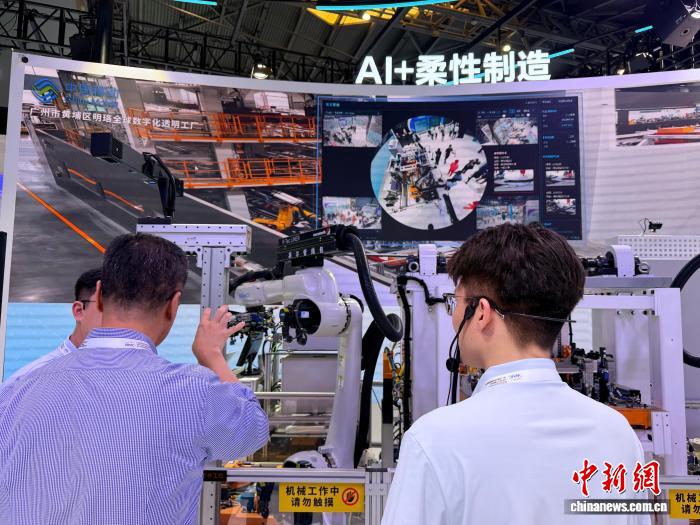
Evidence type: On-site photo from event coverage. Source: China News Service WAIC Agent Report, accessed 2026-07-20. On-site operation ≠ production-line acceptance.
What Gets Filtered Out at Day 7, Day 30, and Day 90?
- Day 7: Verify links, pricing, and product status.
- Day 30: Confirm pilot deployments, model cards, and official documentation.
- Day 90: Retain only candidates with an active contact person, reproducible results, or tangible procurement progress.
If an exhibit offers only the same demo video across all three reviews, move it from the pilot pool to archival storage. Conversely, an industrial project without a major booth—but backed by production-line baselines, sustained uptime records, and repeat orders—deserves higher priority. This cadence transforms WAIC from a one-time list into a quarterly observational dataset.
Each review updates the same evidence card—no duplicate summaries. That preserves state changes, reduces redundant pages, and avoids keyword cannibalization within the site. Review dates must be publicly visible.
Several hard facts from the event already qualify for direct inclusion on evidence cards:
- China News Service’s outcomes report notes the “Dengfeng 8000” supercluster debuted live—the first domestically built AI infrastructure with 100,000+ GPUs.
- Smart pharmacy robots complete drug picking and delivery in ~70 seconds—and are already operational across multiple Shanghai pharmacies.
- The agent report states StarRocks’ GPU-native cognitive database is in preview, claiming 20–100× speedup over CPU-based equivalents—though such ratios require retesting on identical hardware and query sets.
- Shanghai’s “AI + Energy & Carbon Intelligence Space” adopts a 1+4+N architecture, with official timelines: optimization completion in 2026, full-service matrix rollout in 2027, and functional/scenario expansion in 2028.
These represent four distinct maturity categories: verified compute hardware, deployed robotics, preview software, and phased government initiatives—each requiring separate evaluation criteria, not blended ranking.
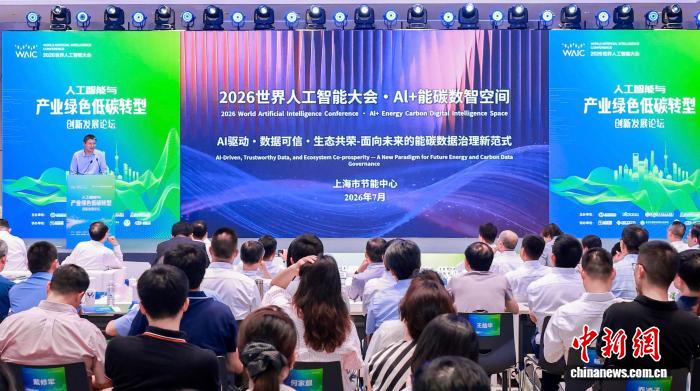
Evidence type: On-site photo from event coverage. Source: China News Service – AI + Energy & Carbon Digital Intelligence Space, accessed on 2026-07-20. Delivery progress remains subject to annual verification against the 2026–2028 timeline.
Frequently Asked Questions
When is WAIC 2026 taking place?
This year’s conference runs in Shanghai from July 17 to 20, 2026. The final agenda is subject to confirmation on the official event website.
Which theme carries the highest information density this year?
Five core themes stand out: foundation models, AI agents, embodied robotics, computing infrastructure, and industrial AI—each interwoven with governance considerations.
Are Qwen3.8 and Kimi K3 featured on the official WAIC webpage?
They represent the most talked-about model releases during the event—but their specifications, API availability, and open-source status must be verified on their respective dedicated pages.
How do I assess whether an exhibit reflects a mature product?
Look for: live access points, comprehensive documentation, repeatable testing results, named enterprise customers, sustained operational uptime, and confirmed procurement contracts—not just flashy demos.
What should I do right after the conference?
Categorize shortlisted solutions as live / beta / demo / announced, then run small-scale validations on the top five most relevant ones.
Official & Primary Sources
- WAIC Forum Page: Official forum entry point as of access date; confirms forum name, schedule, and organizers; legacy URLs now return 404
- China News Service – WAIC “Hard Tech” Highlights: Covers the 100,000-GPU cluster, pharmacy robots, and governance initiatives
- China News Service – WAIC AI Agent Field Report: Details GPU-accelerated databases, model gateways, robotics deployments, and industrial use cases
- China News Service – AI + Energy & Carbon Digital Intelligence Space: Explains the “1+4+N” architecture and the 2026–2028 rollout timeline
All sources accessed on 2026-07-20. News reports help confirm event timing and public statements—but for version numbers, technical parameters, access methods, company identities, or scheduling details, always defer to official pages first. Any missing or unverifiable details are explicitly flagged as pending verification—never inferred from search snippets.
Further Reading
Related reading
- Qwen API pricing and access for builders: verify the model, region, and real test cost
- Kimi Pricing and API Access for Builders
- Kimi Code CLI and IDE Evaluation for Builders
- How to Use the DeepSeek API for Builder Workflows
RadarAI helps builders track AI updates, compare source-backed signals, and decide which changes are worth acting on.