Seven Smartphone AI Services Reported as Filed in China: On-Device vs Cloud
Editorial standards and source policy: Editorial standards, Team. Content links to primary sources; see Methodology.
Last checked: 2026-07-22
Public reporting on July 21, 2026 identified seven smartphone generative-AI services in a new filing batch: Apple Intelligence, Samsung Galaxy AI, Huawei Xiaoyi, OPPO AndesGPT, vivo's BlueLM on-device model, Xiaomi HyperAI, and a Nubia/Doubao phone model service. The list matters because it puts Apple, Samsung, and major Chinese handset makers inside one compliance and product-availability discussion.
The evidence has an important limit. RadarAI found an accessible full-text public report naming the seven services, but did not obtain a directly accessible primary regulator table that independently exposes all seven rows. This page therefore attributes the list to public full-text reporting. It does not invent filing numbers or claim an independent extraction from the Cyberspace Administration of China database.
A filing also does not mean every advertised feature is immediately available on every phone, account, language, or region. A usable phone feature still depends on device hardware, memory, NPU support, operating-system version, account eligibility, regional product policy, and rollout state. Some tasks run locally, some in the cloud, and many move between the two.
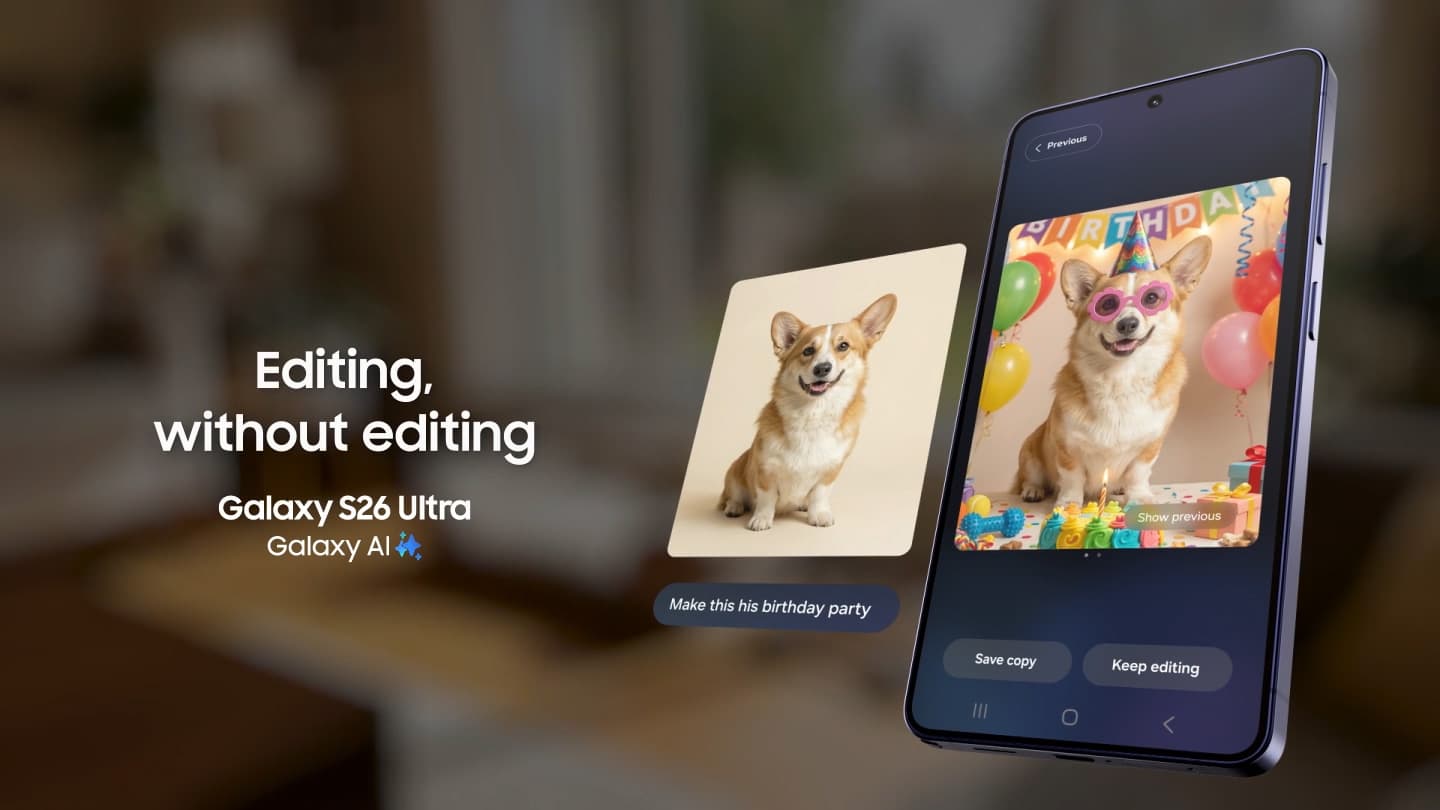
Image source: Samsung Galaxy AI product page, accessed July 22, 2026. The image documents a public product surface; it does not prove the Chinese filing scope, local execution share, or availability on every Galaxy model.
The seven publicly reported services
| Service | Vendor ecosystem | What the report supports | What still needs device-level verification |
|---|---|---|---|
| Apple Intelligence | Apple | Named in the reported filing batch | Mainland China feature set, supported models, OS version, partner model, and release schedule |
| Galaxy AI | Samsung | Named in the reported filing batch | Which tasks run locally or remotely by Galaxy device, language, and account |
| Xiaoyi | Huawei | Named in the reported filing batch | Exact model version, HarmonyOS requirement, device matrix, and rollout stage |
| AndesGPT | OPPO | Named in the reported filing batch | Which assistant and media functions are fully local versus cloud-backed |
| BlueLM on-device model | vivo | Named in the reported filing batch | Model footprint, supported SoCs, OS versions, and feature boundaries |
| HyperAI | Xiaomi | Named in the reported filing batch | Device, region, account, language, and connectivity requirements |
| Doubao phone model service | Nubia and partner-model ecosystem | Named in the reported filing batch | Commercial device range, vendor/model-provider responsibilities, and data path |
This is not a ranking. The user experience is produced by at least six layers: the NPU and memory budget, operating-system permissions, local model selection, cloud routing, compliance and rollout state, and the exact app action. A single phone can use a small local classifier, an on-device speech model, a cloud reasoning model, and a specialized image network in one apparent assistant session.
What a filing proves, and what it does not
The direct value of filing is that a named provider and service have entered the applicable compliance process. It reduces one category of uncertainty for offering generative-AI functionality in mainland China and creates a record that product teams can continue to reconcile against the vendor's product surface.
It does not automatically prove four things:
- every feature in a launch presentation belongs to the filed service;
- older devices have the compute or will receive the required OS update;
- the task stays entirely on the phone;
- quality, power use, temperature, and reliability are comparable across vendors.
A better availability chain is:
reported filing or compliance status
-> vendor's current product documentation
-> supported device and OS matrix
-> account, region, and language eligibility
-> local/cloud data path
-> task-level acceptance test
If any link is missing, "filed" is not a substitute. Apple's global Apple Intelligence page can document public capabilities and privacy architecture, but it cannot by itself establish a mainland China launch date, partner model, or final feature list. Samsung's US Galaxy AI page has the same limitation: it is product evidence, not Chinese regulatory evidence.
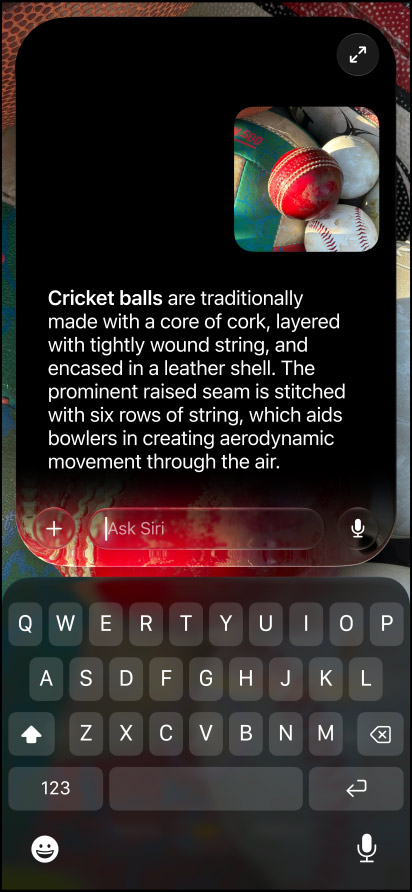
Image source: Apple Intelligence official product page, accessed July 22, 2026. It shows an official device experience, not proof that the same feature is available in mainland China or runs fully on-device.
On-device AI is not a cloud model squeezed into a phone
Phones have hard constraints that a data-center endpoint does not: battery, sustained thermal load, memory contention, app lifecycle, privacy expectations, and intermittent connectivity. On-device models are strongest when the task is frequent, latency-sensitive, privacy-sensitive, and bounded. Examples include wake-word detection, input prediction, notification classification, short rewriting, local image understanding, offline transcription, and personalization.
Cloud models remain useful for large-model reasoning, long context, current knowledge, complex tool use, and high-quality generation. A practical AI phone uses cloud-edge coordination. The device can classify the intent, decide whether sensitive material may leave the phone, trim or redact data, call a remote service when required, and return the result to a system app that owns the action.
| Task | Why local is attractive | When cloud is still needed | What to measure |
|---|---|---|---|
| Wake word and short command | Low latency, always available, private | Multi-step planning or current information | False wake rate, offline success, standby battery |
| Meeting transcription | Raw audio can remain local | High-accuracy multilingual analysis or long synthesis | Word error, speaker separation, network behavior |
| Message rewriting | Fast and bounded | Long-form generation or external facts | Latency, tone preservation, data upload |
| Photo organization | Private library and repeated use | Broad world knowledge or generative editing | Index time, heat, battery, false labels |
| System action | OS can enforce permissions | External service or large reasoning plan | Confirmation, audit log, rollback |
| Personal context | Local data can stay under device controls | Cross-device synchronization | Retention, encryption, revocation |
The phrase "on-device large model" is therefore insufficient for procurement or review. Ask which model executes which step, what leaves the device, what happens offline, and how the system behaves after a timeout.
Why the mobile-terminal AI pilot base matters
Public reporting on a national mobile-terminal AI pilot base points to the industrial gap between a model demo and a shippable device feature. Phone AI requires model compression, chip adaptation, operating-system integration, security evaluation, power testing, and repeated validation across a hardware matrix.
A model can pass a server benchmark and still fail as a product because it consumes too much memory, triggers thermal throttling, blocks another app, loses accuracy after quantization, or depends on a network route that is unavailable in the target region. The pilot-base concept matters if it makes those engineering constraints visible and testable.
For developers, the implication is straightforward: a mobile AI API should disclose device eligibility, local-versus-cloud behavior, permission requirements, model download size, fallback, and failure state. "AI enabled" is not an interface contract.
Worked case: a 30-minute offline meeting assistant test
A product team wants to compare four phones as private meeting assistants. The input is one 30-minute recording with two speakers, 240 domain terms, eight action items, three dates, background ventilation noise, and a five-minute segment in a second language. The team prepares the same recording as a live playback and as a local audio file.
The phone begins in airplane mode with Wi-Fi and cellular data disabled. The tester opens the vendor's documented assistant or recorder entry point and records screen, battery, temperature, permissions, model-download prompts, and any request to reconnect.
The output must include a timestamped transcript, speaker separation, an eight-item action list, dates, and exportable text. The team then repeats the task online to measure what changes when cloud processing is available.
| Measure | Pass condition | Failure sample | Stop signal |
|---|---|---|---|
| Offline start | Task begins without hidden network dependency | Feature opens but refuses the file | Product documentation claims offline use but the task cannot start |
| Transcript | At least 216 of 240 domain terms are correct | Names and product codes are systematically replaced | Accuracy makes human correction slower than manual notes |
| Speaker split | At least 90% of turns assigned correctly | Speakers merge after overlap | No way to correct speaker identity |
| Action extraction | All eight actions found; at least seven owners/dates correct | General summary omits assigned work | Missing action could cause operational harm |
| Privacy behavior | No network traffic in airplane mode; local file path documented | Reconnect prompt lacks a data explanation | Audio upload occurs without an explicit choice |
| Power and heat | Battery drop and temperature remain inside the team's device budget | Thermal warning or killed background apps | Device becomes unreliable for normal use |
| Export | Transcript and actions export to a documented format | Result trapped in a proprietary view | Team cannot retain or delete the record predictably |
The acceptance decision is not "which phone produced the prettiest summary." It is which device completed the bounded task with explainable local/cloud behavior, tolerable correction work, and a recoverable result.
Eight questions to ask before buying an AI phone
- Which exact device and OS version support the feature?
- Is a model download required, and how large is it?
- Which steps work in airplane mode?
- What data leaves the phone when online?
- Which account, region, and language restrictions apply?
- What happens after a network timeout or model failure?
- Can the user inspect, export, correct, and delete the result?
- Is the advertised capability part of the filed service or a separate feature path?
Do not conclude that seven filings mean seven universally available products, that every task is local, or that a global product page proves mainland China availability. The useful conclusion is that compliance, operating-system integration, and cloud-edge routing are becoming a common product layer across major smartphone vendors.
FAQ
Which seven services were named?
Public reporting named Apple Intelligence, Samsung Galaxy AI, Huawei Xiaoyi, OPPO AndesGPT, vivo BlueLM on-device, Xiaomi HyperAI, and a Nubia/Doubao phone model service.
Does filing mean Apple Intelligence is immediately available on every mainland China iPhone?
No. Device, OS, account, region, partner, and rollout conditions still require confirmation from the current product surface.
Does on-device AI always work without a network?
No. Many products use a hybrid route. Test the exact task in airplane mode and observe what changes online.
Is a local model automatically more private?
Local execution can reduce data transfer, but privacy also depends on logs, synchronization, app permissions, backups, analytics, and cloud fallback.
Why does RadarAI attribute the list to public reporting?
The accessible full-text report named the seven services, while RadarAI did not obtain a directly accessible primary regulator table containing all seven rows. The attribution preserves that evidence boundary.
Sources
- Public full-text filing report
- National mobile-terminal AI pilot base report
- Apple Intelligence official page
- Samsung Galaxy AI official page